Tea Processing
Tea leaves are harvested by plucking new leaves and terminal
buds from the tips on the branches. Alternatively, mechanical trimmers
can be used to cut the new flushes from the plants. These harvesting
techniques aim to remove the buds and several young immature leaves,
for subsequent processing while stimulating the growth of dormant
terminal buds thus forming new shoots and leaves. Successive harvests
are typically done during the growing period and are conducted at
intervals that range from 4 to 14 day, depending on the growth rate of
the plants. 1
After picking, the tea leaves soon begin to wilt and oxidize, unless
they are immediately dried. The leaves turn progressively darker as
their chlorophyll breaks down and tannins are released. This enzymatic
oxidation process is caused by the plant's intracellular enzymes and
causes the tea to darken. In tea processing, the darkening is stopped
at a predetermined stage by heating, which deactivates the enzymes
responsible. In the production of black teas, the halting of
oxidization by heating is carried out simultaneously with drying.
Without careful moisture and temperature control during manufacture and
packaging, the tea may become unfit for consumption, due to the growth
of undesired molds and bacteria. At minimum, it may alter the taste and make it undesirable. 3
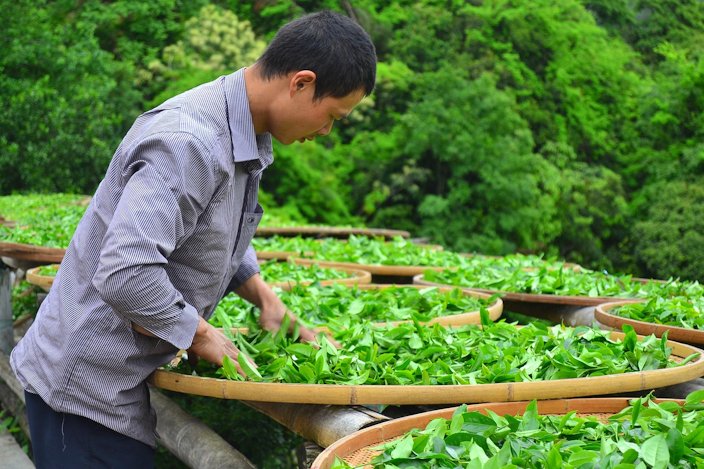
Fig. 1. Spreading the fresh leaves on bamboo baskets
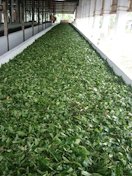
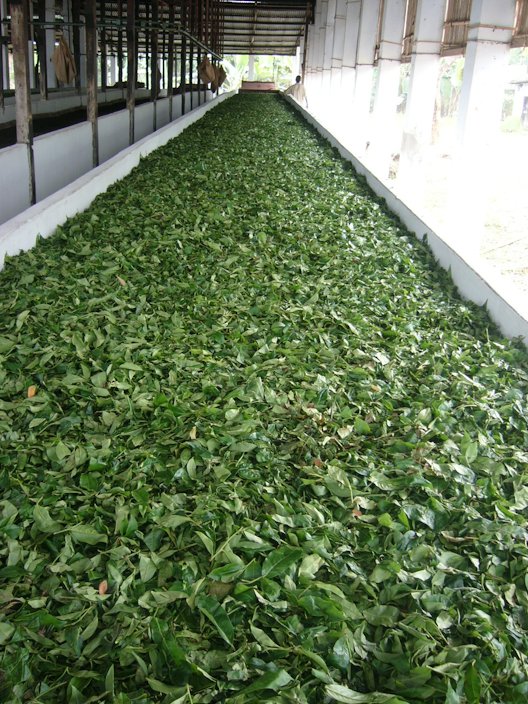
Fig. 2. Tea leaves being wilted at a Bangladeshi tea factory
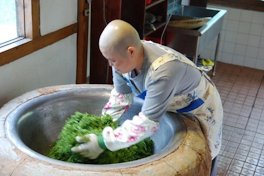
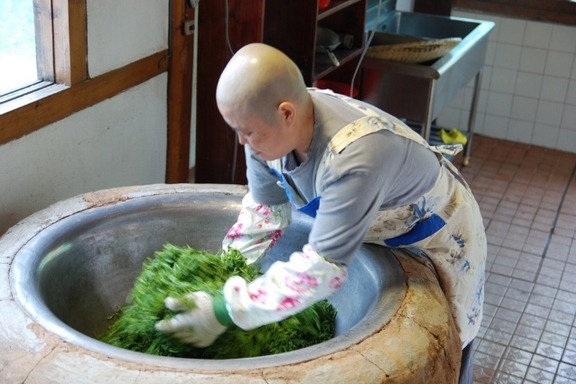
Fig. 3. A bhikkhuni (female Buddhist monastic) roasting tea leaves in Daejeon, Korea
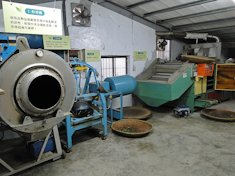
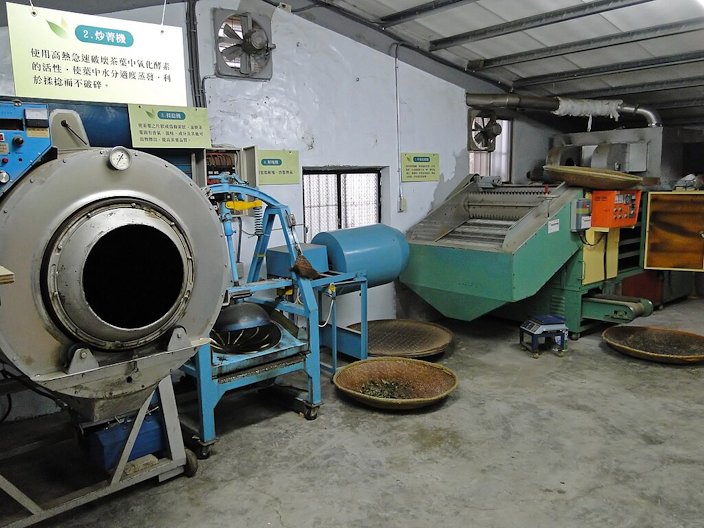
Fig.
4. Machinery used for fixation, rolling, break up the rolled tea, and
drying the tea, Tea factory in Pinglin District, New Taipei City, Taiwan
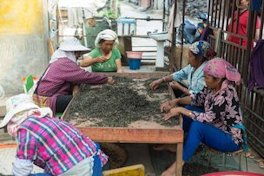
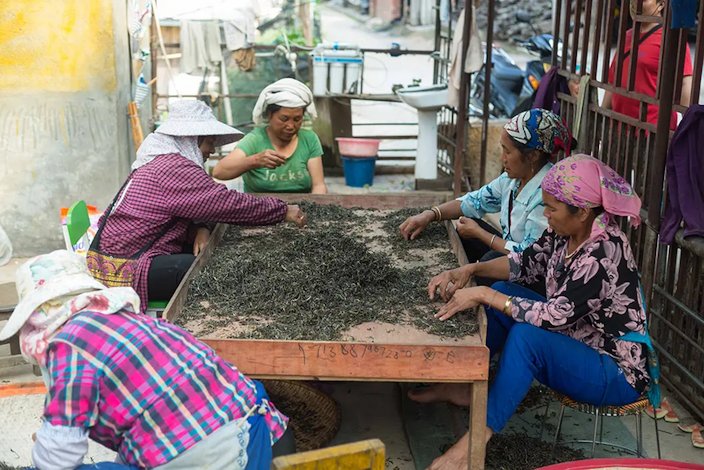
Fig. 5. Sorting máochá (the green pu-erh leaves); tea sorting can help remove physical impurities, such as stems and seeds
The
categories of tea are distinguished by the processing they undergo. In
its most general form, tea processing involves different manners and
degrees of oxidation of the leaves, stopping the oxidation, forming the
tea and drying it. 2
The
innate flavor of the dried tea leaves is determined by the type of
cultivar of the tea bush, the quality of the plucked tea leaves, and
the manner and quality of the production processing they undergo. After
processing, a tea may be blended with other teas or mixed with
flavourants to alter the flavor of the final tea. When producing black,
pu'erh and oolong teas there is an additional purpose of processing: to
encourage
oxidization, which further develops flavour and aroma compounds. 2
Although
each type of tea has a different taste, smell, and visual appearance,
tea processing for all tea types consists of a very similar set of
methods with only minor variations. Without careful moisture and
temperature control during its manufacture and life thereafter, fungi
will grow on tea. This fungus causes fermentation that will contaminate
the tea and may render it unfit for consumption. 2
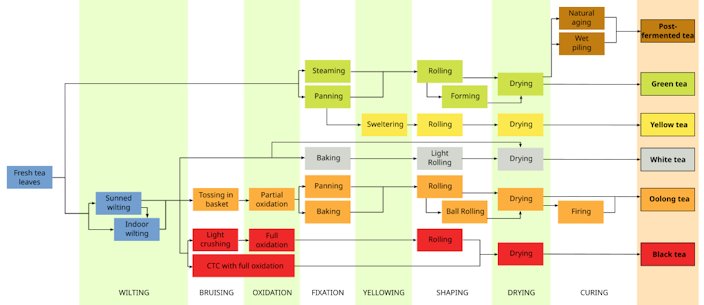
Fig. 6. Processing for Green, White, Oolong, Black, and Post-fermentation teas
Withering/wilting:
The tea leaves will begin to wilt soon after picking, with a gradual
onset of enzymatic oxidation. Withering is used to remove excess water
from the leaves and allows a very slight amount of oxidation.The leaves
can be either put under the sun or left in a cool breezy room to pull
moisture out from the leaves. 5
Disruption/bruising:
Known in the Western tea industry as "disruption" or "leaf maceration",
the teas are bruised or torn in order to promote and quicken
oxidation.The leaves may be lightly bruised on their edges by shaking
and tossing in a bamboo tray or tumbling in baskets.More extensive leaf
disruption can be done by kneading, rolling, tearing, and crushing,
usually by machinery.The bruising breaks down the structures inside and
outsideof the leaf cells and allows from the co-mingling of oxidative
enzymes with various substrates, which allows for the beginning of
oxidation.This also releases some of the leaf juices, which may aid in
oxidation and change the taste profile of the tea. 5
Oxidation is
a reaction of enzymes in tea leaves with oxygen. Earlier it was also
called fermentation but this term is incorrect because a fermentation
process always involves microorganisms. In production of pu-erh tea
fermentation is used to make the tea ripe. 3
Oxidation
is highly important in the formation of many taste and aroma compounds,
which give a tea its liquor colour, strength, and briskness. Depending
on the type of tea desired, under or over-oxidation can result in
grassy flavours, or overly thick winey flavours. 5
For green tea, the oxidation must be stopped
immediately while black tea is oxidized to nearly 100%. Oolong however,
has an average degree of oxidation of 10-80%. 3
Fixation/kill-green:
Kill-green done to stop the tea leaf oxidation at a desired level. This
process is accomplished by moderately heating tea leaves, thus
deactivating their oxidative enzymes and removing unwanted scents in
the leaves, without damaging the flavour of the tea.Traditionally, the
tea leaves are panned in a wokor steamed,but with advancements in
technology, kill-green is sometimes done by baking or "panning" in a
rolling drum. In some white teas and some black teas such as CTC
blacks, kill-green is done simultaneously with drying. 5
Sweltering/yellowing:
Unique to yellow teas, warm and damp tea leaves from after kill-green
are allowed to be lightly heated in a closed container, which causes
the previously green leaves to turn yellow. The resulting leaves
produce a beverage that has a distinctive yellowish-green hue due to
transformations of the leaf chlorophyll. Through being sweltered for
6–8 hours at close to human body temperatures, the amino acids and
polyphenols in the processed tea leaves undergo chemical changes to
give this tea its distinct briskness and mellow taste. 5
Rolling/shaping:
The damp tea leaves are then rolled to be formed into wrinkled strips,
by hand or using a rolling machine which causes the tea to wrap around
itself. This rolling action also causes some of the sap, essential
oils, and juices inside the leaves to ooze out, which further enhances
the taste of the tea. The strips of tea can then be formed into other
shapes, such as being rolled into spirals, kneaded and rolled into
pellets, or tied into balls, cones and other elaborate shapes. In many
types of oolong, the rolled strips of tea leaf are then rolled to
spheres or half spheres and is typically done by placing the damp
leaves in large cloth bags, which are then kneaded by hand or machine
in a specific manner. The tea can also be pressed into bricks through
the use of heavy stones or presses. 5
Drying:
Drying is done to "finish" the tea for sale. This can be done in a
myriad of ways including panning, sunning, air drying, or baking.
Baking is usually the most common. Great care must be taken to not
over-cook the leaves. The drying of the produced tea is responsible for
many new flavour compounds particularly important in green teas. 5
Aging/curing:
While not always required, some teas required additional aging,
fermentation, or baking to reach their drinking potential. For
instance, a green tea puerh, prior to curing into a post-fermented tea,
is often bitter and harsh in taste, but becomes sweet and mellow
through fermentation by age or dampness. Additionally, oolong can
benefit from aging if fired over charcoal. Flavoured teas are
manufactured in this stage by spraying the tea with aromas and flavours
or by storing them with their flavorants. 5
Sorting:
Tea sorting can help remove physical impurities, such as stems and
seeds. Using a sorting equipment to improve tea production efficiency
is very common in a tea processing plants, especially in black tea
processing. A Colour sorter may also be used to classify final product
grades according to colour and shape. 5
Types of teas
There are at least six different types of tea: white, yellow, green,
oolong, black (called red tea in China), and post-fermented tea (or
black tea for the Chinese) of which the most commonly found on the
market are white, green, oolong, and black. Some varieties, such as
traditional oolong tea and Pu-erh tea, a post-fermented tea, can be
used medicinally. 3
• White tea:
(白茶) is a lightly oxidized tea grown and produced primarily in
China. White tea comes from the buds and leaves of the "Da Bai"
cultivar of Chinese Camellia sinensis
plant. The leaves and buds are allowed to wither before they are
lightly processed to prevent oxidation or further tea processing. 3
• Yellow tea:
(|黃茶) usually implies a special tea processed similarly to green tea,
but with a slower drying phase, where the damp tea leaves are allowed
to sit and yellow. The tea generally has a very yellow-green appearance
and a smell different from both white tea and green tea. The smell is
sometimes mistaken for black if the tea is cured with other herbs, but
similarities in taste can still be noticed between yellow, green and
white teas. 3
• Green tea:
Unwilted and unoxidized. Green tea is processed and grown in a variety
of ways, depending on the type of green tea desired. As a result of
these methods, maximum amounts of polyphenols and antioxidants are
retained, giving maximum green tea benefits. 3
• Oolong: is
produced through a unique process including withering under the sun and
oxidation before curling and twisting. Some are rolled into long curly
leaves, while others are 'wrap-curled' into small beads, each with a
tail. The degree of oxidation can range from 8% - 80% depending on the
variety and production style. 3
• Black tea:
Is a type of tea that is more oxidized than oolong, green and white
teas. Black tea is generally stronger in flavor than the less oxidized
teas. Two principal varieties of the species are used – the
small-leaved Chinese variety plant (C. sinensis subsp. sinensis), used for most other types of teas, and the large-leaved Assamese plant (C. sinensis subsp. assamica), which was traditionally mainly used for black tea.
The
leaves are first withered by blowing air on them. Then black teas are
processed in either of two ways, CTC (Crush, Tear, Curl) or orthodox.
Orthodox: The withered tea leaves are heavily rolled either by
hand or mechanically through the use of a cylindrical rolling table or
a rotovane. The rolling table consists of a ridged table-top moving in
an eccentric manner to a large hopper of tea leaves, of which the
leaves are pressed down onto the table-top. The process produces a
mixture of whole and broken leaves, and particles which are then
sorted, oxidized, and dried.
CTC: "Cut, tear, curl" or
"Crush, tear, curl" black teas is a production method developed by
William McKercher in 1930. It is consider by some as a significantly
improved method of producing black tea to the orthodox through the
mincing of withered tea leaves. The use of a rotovane to precut the
withered tea is a common preprocessing method prior to feeding into the
CTC.
Next, the leaves are oxidized under controlled temperature and
humidity. (This process is also called "fermentation", which is a
misnomer since no actual fermentation takes place.) The level of
oxidation determines the quality of the tea.
Then the leaves are dried to arrest the oxidation process.
Finally,
the leaves are sorted into grades according to their sizes (whole leaf,
brokens, fannings and dust), usually with the use of sieves. 3
• Post-fermented tea:
Is a variety of fermented tea produced in Yunnan province, China.
Fermentation is a tea production style in which the tea leaves undergo
microbial fermentation and oxidation after they are dried and rolled. 4
Pu-erh
traditionally begins as a raw product known as "rough" Mao Cha (毛茶)* and
can be sold in this form or pressed into a number of shapes and sold as
"raw" Sheng Cha (生茶). Both of these forms then undergo the complex
process of gradual fermentation and maturation with time. All types or
pu-erh can be stored for maturity before consumption and that is why it
has become common for the products to be labelled with year and region
of production. 4
Pu-erh in both its ripened and aged forms has undergone
secondary oxidization and fermentation caused both by
organisms growing
in the tea and free-radical oxidation, thus making it a unique type of
tea. 4
Pu-erh
is compressed into a variety of shapes. Other lesser seen forms
include: stacked "melon pagodas", pillars, calabashes, yuanbao, and
small bricks (2–5 cm in width). pu-erh is also compressed into the
hollow centers of bamboo stems or packed and bound into a ball inside
the peel of various citrus fruits. 4
* While un-aged and
unprocessed, máochá pu-erh is similar to green tea. Two subtle
differences worth noting are that pu-erh is not produced from the small
leaf chinese varietal but the broad leaf varietal mostly found in the
southern Chinese Provinces and India. The second, is that pu-erh leaves
are picked as one bud and 3-4 leaves whilst green tea is picked as one
bud and 1-2 leaves. This means that older leaves contribute to the
qualities of pu-erh tea. 4
Compressed forms of tea
Compressed
tea, called tea bricks, tea cakes or tea lumps, and tea nuggets
according to the shape and size, are blocks of whole or finely ground
black tea, green tea, or post-fermented tea leaves that have been
packed in molds and pressed into block form. This was the most commonly
produced and used form of tea in ancient China prior to the Ming
Dynasty. Although tea bricks are less commonly produced in modern
times, many post-fermented teas, such as pu-erh, are still commonly
found in bricks, discs, and other pressed forms. Tea bricks can be made
into beverages like tea or eaten as food, and were also used in the
past as a form of currency. 6
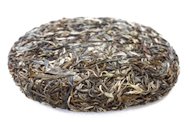
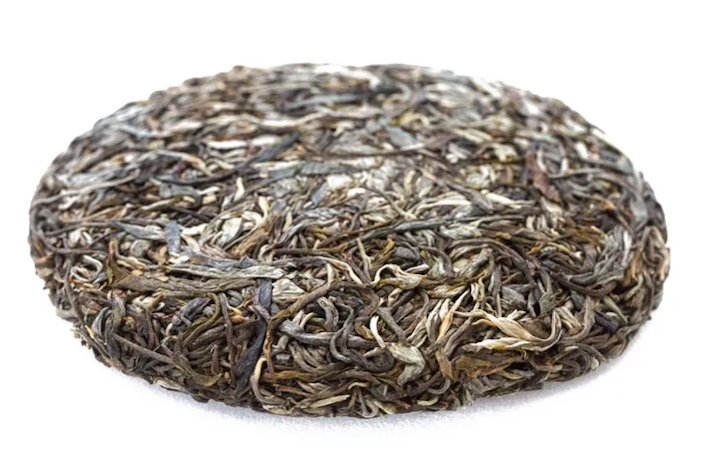
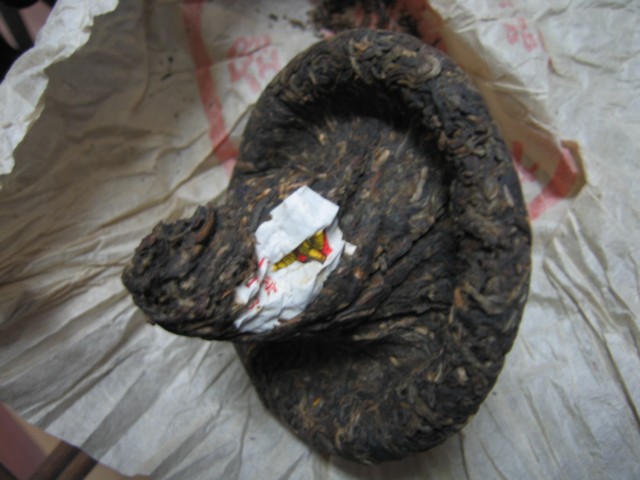
Fig.
7. Bǐngchá, cake, or disc, a round, flat, disc or puck-shaped tea, the
size ranges from as small as 100g to as large as 5 kg or more, with
357g, 400g, and 500g being the most common.
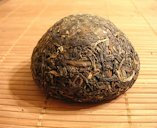
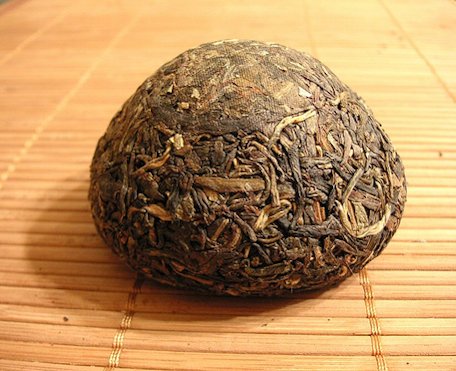
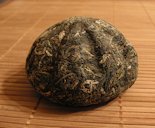
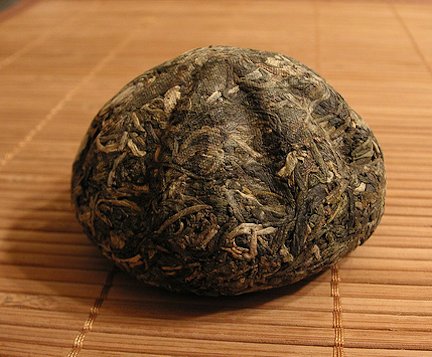
Fig.
8. Tuóchá, bowl, or nest, a convex knob-shaped tea, its size ranges from
3g to 3 kg or more, with 100g, 250g and 500g being the most common.
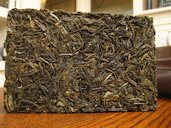
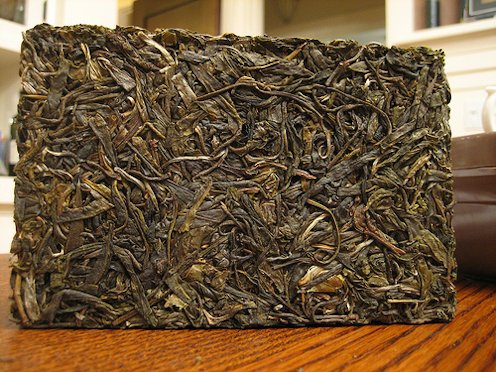
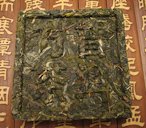
Fig. 9. Dadugang 2006 raw pu-erh, Zhuānchá, a thick rectangular block of tea, usually in 100g, 250g, 500g and 1000g sizes
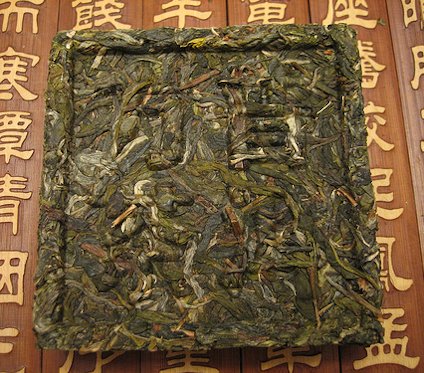
Fig.
10. Square Fāngchá, A convex knob-shaped tea, its size ranges from 3g to
3 kg or more, with 100g, 250g and 500g being the most common.
Fig. 11.
Mushroom, Jǐnchá, Literally meaning "tight tea," the tea is shaped much
like túocha, but with a stem rather than a convex hollow. This makes
them quite similar in form to a mushroom. pu-erh tea of this shape is
generally produced for Tibetan consumption, and is usually 250g or 300g.
Fig.
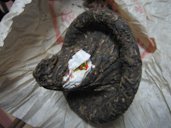
12. Melon, or gold melon, Jīnguā, its shape is similar to tuóchá,
but larger in size, with a much thicker body decorated with
pumpkin-like stripes. 3
|
|
Bibliography
1 Cohen, C. J., et al. "United States tea: A synopsis of
ongoing tea research and solutions to United States tea production
issues." Frontiers in Plant Science, 13:934651, 2022, (CC BY 4.0), doi.org/10.3389/fpls.2022.934651.
Accessed 21 July 2025.
2 "Tea processing." Wikipedia, (CC BY-SA 4.0), en.wikipedia.org/wiki/Tea_processing.
Accessed 21 July 2025.
3 "Tea, Processing." Teapedia, The Tea
Encyclopedia, Last edited 4 Nov. 2024, (CC BY-SA 3.0), teapedia.org/en/Tea.
Accessed 19 July 2025.
4 "Pu-erh." Teapedia, The Tea
Encyclopedia, Last edited 14 Jan. 2025, (CC BY-SA 3.0), teapedia.org/en/Pu-erh.
Accessed 19 July 2025.
5 Li ly. "Tea Processing." Academia,www.academia.edu/88688679/TEA_PROCESSING. Accessed 23 July 2025.
6 "Tea processing." Wikipedia, (CC BY-SA 4.0), en.wikipedia.org/wiki/Compressed_tea.
Accessed 23 July 2025.
Photographs
Fig. 1 zhongxiong. "Sun station." Pixabay, (CC0), pixabay.com/photos//sun-tea-tea-tea-station-2474264/.
Accessed 20 July 2025.
Fig. 2 "Tea leaves being wilted at a Bangladeshi tea factory." Wikimedia Commons, 24 Mar. 2007, Public Domain, commons.wikimedia.org/File:Tea_Factory_Srimongol_Sylhet_Bangladesh_5.JPG.
Accessed 19 July 2025.
Fig. 3 daejeonstory. "A bhikkhuni roasting tea leaves in Daejeon, Korea." Wikimedia Commons, 27 Nov. 2014, (CC BY 4.0), commons.wikimedia.org/File:Roasting_tea_leaves.jpg.
Accessed 19 July 2025.
Fig. 4 Gagnon, Bernard. "Machinery used for fixation, rolling, break up the rolled tea, and drying the tea." Wikimedia Commons, 1 Mar. 2011, GFDL, (CC BY-SA 3.0), (CC BY-SA 2.5), (CC BY-SA 2.0), (CC BY-SA 1.0), commons.wikimedia.org/ File:Tea_factory,_Pinglin.jpg.
Accessed 23 July 2025.
Fig. 5 "Sorting maocha." Teapedia, The Tea
Encyclopedia, 21 Sept. 2024, Last edited 14 Jan. 2025, (CC BY-SA 3.0), teapedia.org/en/File:Sorting-maocha.webp.
Accessed 19 July 2025.
Fig. 6 "Processing for Green, White, Oolong, Black, and Post-fermentation teas." Wikimedia Commons, 11 Sept. 2010, (CC BY-SA 3.0), GFDL, commons.wikimedia.org/File:Teaprocessing.svg.
Accessed 19 July 2025.
Fig. 7 "Bǐngchá, Cake, or Disc." Teapedia, The Tea
Encyclopedia, 15 Oct. 2024, Last edited 14 Jan. 2025, (CC BY-SA 3.0), teapedia.org/en/File:Pu-erh.webp.
Accessed 21 July 2025.
Fig. 8 "Tuóchá, Bowl, or Nest." Teapedia, The Tea
Encyclopedia, 1 Nov. 2024, Last edited 14 Jan. 2025, (CC BY-SA 3.0), teapedia.org/en/File:Xiaguan_1992_tuo_cha.jpg.
Accessed 21 July 2025.
Fig. 9 Fasi, Jason. "Zhuan cha, Dadugang 2006 raw pu-erh zhuancha." Wikimedia Commons, 18 Oct. 2006, (CC BY 2.5), commons.wikimedia.orgF/ile:Zhuan_cha.jpg.
Accessed 19 July 2025.
Fig. 10 "Square Fāngchá." Teapedia, The Tea
Encyclopedia, 1 Nov. 2024, Last edited 14 Jan. 2025, (CC BY-SA 3.0), teapedia.org/en/Fang_cha.jpg.
Accessed 19 July 2025.
Fig. 11 "Mushroom, Jǐnchá." Teapedia, The Tea
Encyclopedia, 1 Nov. 2024, Last edited 14 Jan. 2025, (CC BY-SA 3.0), teapedia.org/en/File:Jincha.jpg.
Accessed 19 July 2025.
Fig. 12 Fasi, Jason. "Golden melon pu-erh tea." Wikimedia Commons, 27 Sept. 2006, (CC BY 2.5), commons.wikimedia.orgF/ile:Zhuan_cha.jpg.
Accessed 19 July 2025.
Published 21 July 2025 LR
|