Longan Varieties in Florida
A number of new and re-introductions including 'Edau' ('Daw'), 'Chompoo', 'Haew', and 'Biew Kiew', also known as 'Beau Kaew', are under evaluation by several institutions and producers. However, nothing superior to 'Kohala' has been identified. 4 Although there are numerous longan cultivars in Southeast Asia, the cultivar diversity is lower in other regions. The following cultivars are the most commonly cultivated in Puerto Rico, Florida and Hawai'i: 'Kohala'
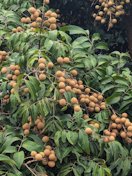
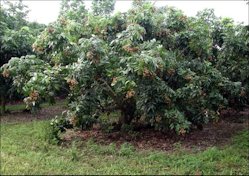
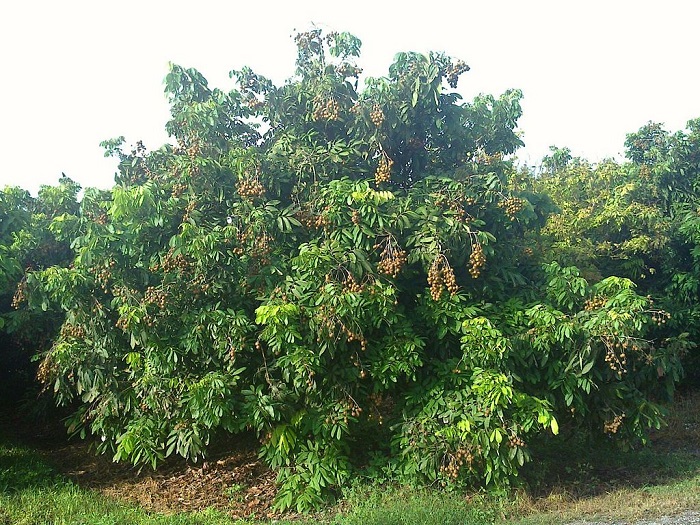
‘Kohala’ - This Hawai'ian selection is the primary commercial and home-garden cultivar in Florida. It offers consistent production and large fruit of sweet flavor and good quality. Most agree that 'Kohala' remains the best all-around commercial cultivar. The fruit matures early, usually in July. 2 'Diamond River'
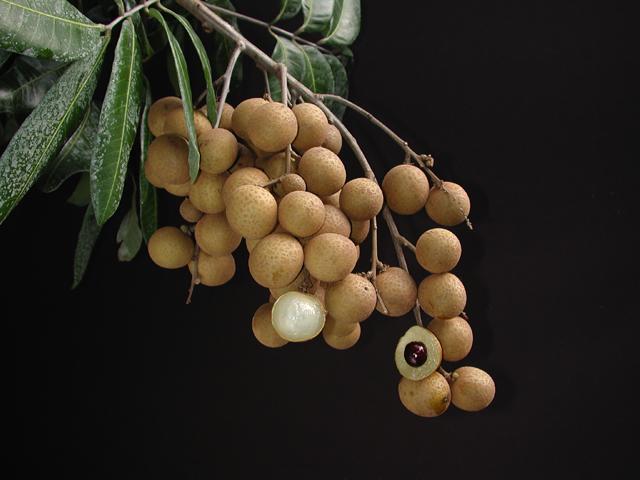
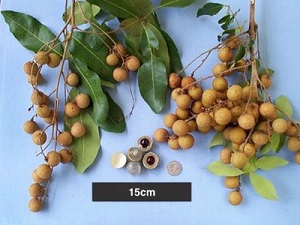
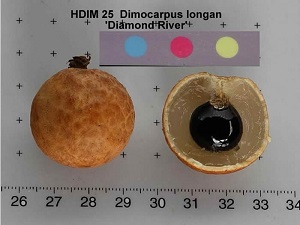
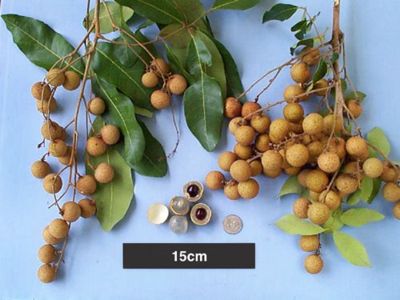
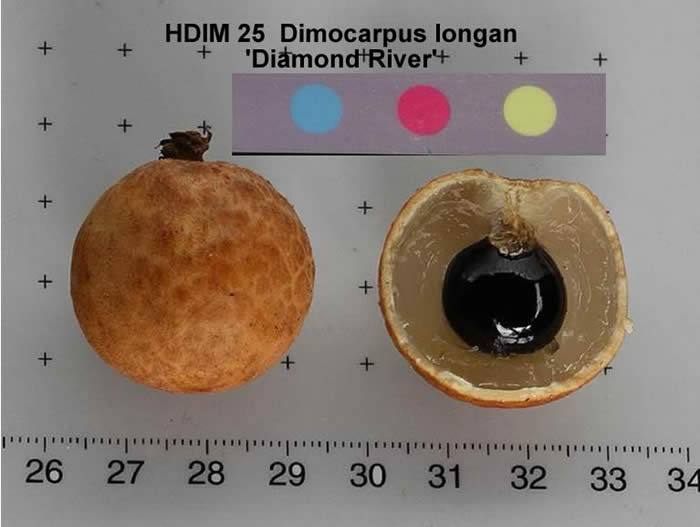
‘Diamond River’ - One of the recently introduced cultivars is named 'Diamond River'. This cultivar is from Thailand and is reported to fruit every year, be precocious, produce off-season, and produce a sizeable late season crop. However, fruit quality is only fair and the tree is very susceptible to limb breakage. 1 'Biew Kiew' Also known as 'Beau Kaew' 4  Fig. 5 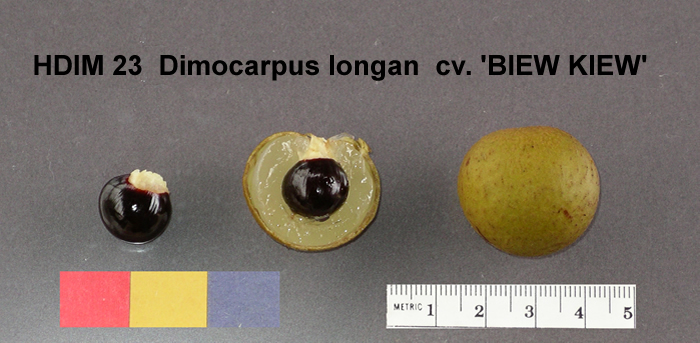 ‘Biew Kiew’ - Also known as 'Beau Kaew'. This Thai variety bears large fruit of superior quality. Indeed, the flavor is widely regarded to be among the best of any of the longans. Thus far, its bearing habits have been steady in Florida. It is a mid-season variety, with fruit ripening from late July through September. 2,4 'Si Chompoo'  Fig. 6 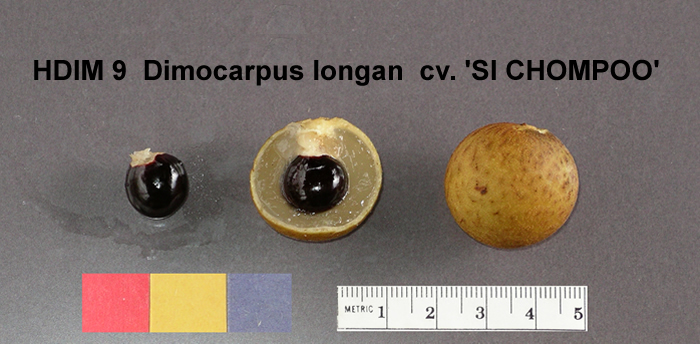 ‘Si Chompoo’ - This Thai variety exceeds 'Kohala' in overall quality, but its bearing habits have not been adequately assessed. The aril is reportedly pink-tinged in Thailand. In Florida, this trait has not been evident. The fruit is firm fleshed, has a small seed, and has an excellent, perfumed flavor. Fruit ripen from late July through August. 2 'Ponyai'  Fig. 7 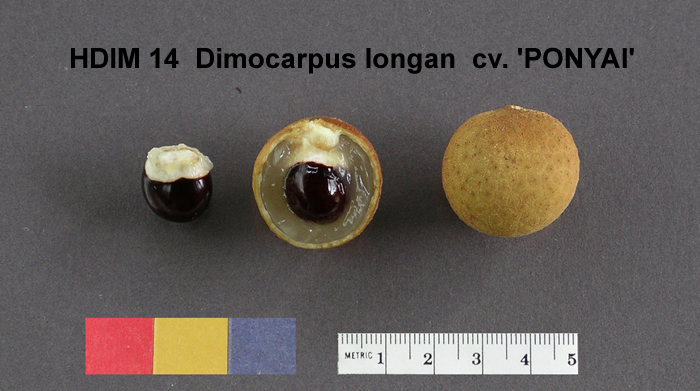 'Ship'i' - Very large size, less tasty, late season, planted in Florida 'Ship' i' ('Snake skin') has the largest fruit, as big as a small lychee and slightly elongated. The skin is rough, the seed large, some of the juice is between the rind and the flesh, and the quality is low. Its only advantage is that it is very late in season. 3 Further Reading Longan Growing in the Florida Home Landscape, University of Florida pdf TREC Tropical Fruit Collections, UF/TREC/IFAS pdf Back to Longan Page | ||||||||||||||||||||||||||||||||||||||||||||||||||||||||||||||||||||||||||||||||||||||||||||||||||||||||||
| Bibliography 1 Jonathan H. Crane, et al. "Longan Growing in the Florida Landscape." Horticultural Sciences Dept., UF/IFAS Extension, FC-49, Original pub. Nov. 1978, Revised Apr. 1994, Nov. 2000, Sept. 2005, Oct. 2008, and Nov. 2016, Reviewed Dec. 2019, and 24 July 2023, AskIFAS, edis.ifas.ufl.edu/MG049. Accessed 8 Jan. 2017, 9 May 2020, 10 July 2025. 2 Boning, Charles R. Florida's Best Fruiting Plants- Native and Exotic Trees, Shrubs, and Vines. Sarasota, Pineapple Press, 2006. 3 Fruits of Warm Climates. Julia F. Morton, Miami, 1987. 4 Crane, Jonathan H. "Longan 'Beau Kaew'." TREC Tropical Fruit Collections, 2006, UF/TREC/IFAS, trec.ifas.ufl.edu/crane/pdfs/TREC-Fruit-Collections.pdf. Accessed 9 Apr. 2020. Photographs Fig. 1,2 Maguire, Ian. "'Kohala' longan fruit." UF/IFAS Extension, AskIFAS, edis.ifas.ufl.edu. Accessed 5 June 2015. Fig. 3 Maguire, Ian. "'Diamond River' longan fruit." UF/IFAS Extension, AskIFAS, edis.ifas.ufl.edu. Accessed 5 June 2015. Fig. 4,5,6,7 "Photo Gallery of Longan Accessions." USDA, ARS, National Genetic Resources Program. Germplasm Resources Information Network (GRIN), National Germplasm Resources Laboratory, Beltsville, Maryland, ars.usda.gov. Accessed 5 June 2015. Published 13 Mar. 2015 LR. Last update 8 Dec. 2025 LR |
||||||||||||||||||||||||||||||||||||||||||||||||||||||||||||||||||||||||||||||||||||||||||||||||||||||||||